
HOW PDL WORKS

The PDL Proven Path

PDL helps B2B SaaS organizations strengthen customer onboarding and implementation capacity as they grow—starting with evidence, then building the operating improvements that matter most.

The PDL Proven Path

Seven steps from assessment to improvement

Assess and Diagnose begin before a paid engagement: a free Delivery Capacity Assessment plus a report review that clarifies where control is breaking down. Commit starts the engagement by agreeing priorities and scope. PDL then builds and launches the highest-priority improvements in live customer work, measures what happens, and uses that evidence to guide the next improvement cycle.

The PDL Proven Path: Assess, Diagnose, Commit, Build, Launch, Measure, Improve
1
AssessEstablish the delivery constraint
2
DiagnoseLocate where control breaks down
3
CommitAgree on the result that matters
4
BuildDesign the operating improvements
5
LaunchMove improvements into live work
6
MeasureCapture what actually happens
7
ImproveGuide the next improvement cycle
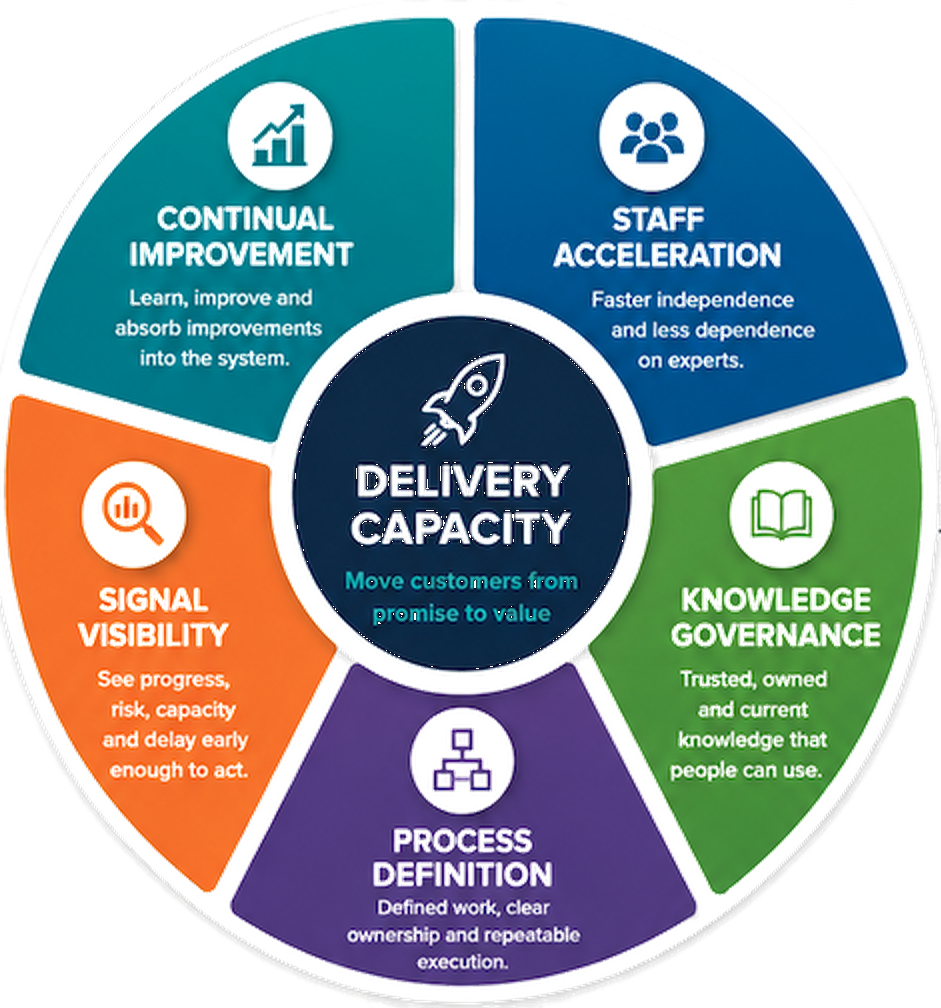
The Five Controls

The operating model behind delivery capacity

The Five Controls determine whether delivery depends on individual effort or functions as scalable organizational infrastructure. Explore the Five Controls in detail →

The Five Controls define what must become reliable; the Proven Path defines how PDL strengthens them.

The Five Controls framework: Staff Acceleration, Knowledge Governance, Process Definition, Signal Visibility, and Continual Improvement surrounding Delivery Capacity

Build the operating capability. Then make it executable every day.

The 90-Day Implementation establishes the operating model. Execution can run in suitable tools you already use, or—where selected—in OnboardingIQ, which is priced separately.

Start with evidence, not assumption

Take the Delivery Capacity Assessment, identify the primary constraint, and decide with evidence what should happen next.