Sales is working. Growth is accelerating.
But onboarding still depends on tribal knowledge and executive intervention.
That tension is a signal.
Signals deserve attention.
When revenue accelerates, onboarding absorbs the load. The strain is predictable at this stage of scale.
Nothing has failed.
But nothing feels lighter.
When structure doesn’t strengthen with growth, pressure compounds.
You built a strong product. Sales is working.
You didn’t intend for onboarding to become the bottleneck.
It doesn’t mean your team isn’t capable.
It means onboarding hasn’t been engineered for scale.
That’s why we built Plan → Do → Launch.
Proven in high-complexity SaaS environments
We’ve deployed onboarding systems across 50,000+ users in regulated SaaS environments.
Institutional knowledge frameworks built to survive turnover.
Designed for regulated and high-accountability organizations.
“We trusted him in week one more than we used to trust teams after a month.”
Example: PDL Onboarding Capacity Analysis
Growth adds clients, complexity, and pressure. The question is whether your onboarding system strengthens under that load — or begins to fracture.
In 15 minutes, the PDL Onboarding Capacity Analysis evaluates whether your onboarding infrastructure is Scalable, Functional, or Struggling across six operational pillars. It reveals where performance is durable — and where growth is quietly increasing structural risk.
You receive a quantified capacity score, a clinical summary of onboarding maturity, and a clear view of where renewal exposure and delivery variability are likely to emerge.
This is not a marketing assessment. It is an operational diagnostic.
If onboarding is already infrastructure, it will show.
If it is still dependent on individuals, improvisation, or tribal knowledge, that will show too.
Run the analysis. See where you stand before scale makes the decision for you.
Measure Your Onboarding CapacityBook a Strategic ConversationPlan → Do → Launch gives you a simple way to strengthen onboarding under scale.
Clear answers about scalable SaaS onboarding infrastructure.
Onboarding infrastructure is a structured operating system for client implementation. It includes defined stages, governed knowledge, measurable adoption milestones, visibility into risk, and continuous improvement processes designed to scale with growth.
The PDL Onboarding Capacity Analysis evaluates performance across six pillars: Staff, Canon, Process, Visibility, Customer Success Integration, and Continuous Improvement. It identifies whether onboarding is scalable, functional, or under structural strain.
As revenue increases, delivery complexity rises. Without structured systems, onboarding becomes dependent on experienced individuals, institutional memory fragments, and executive oversight increases. Scale exposes structural weaknesses.
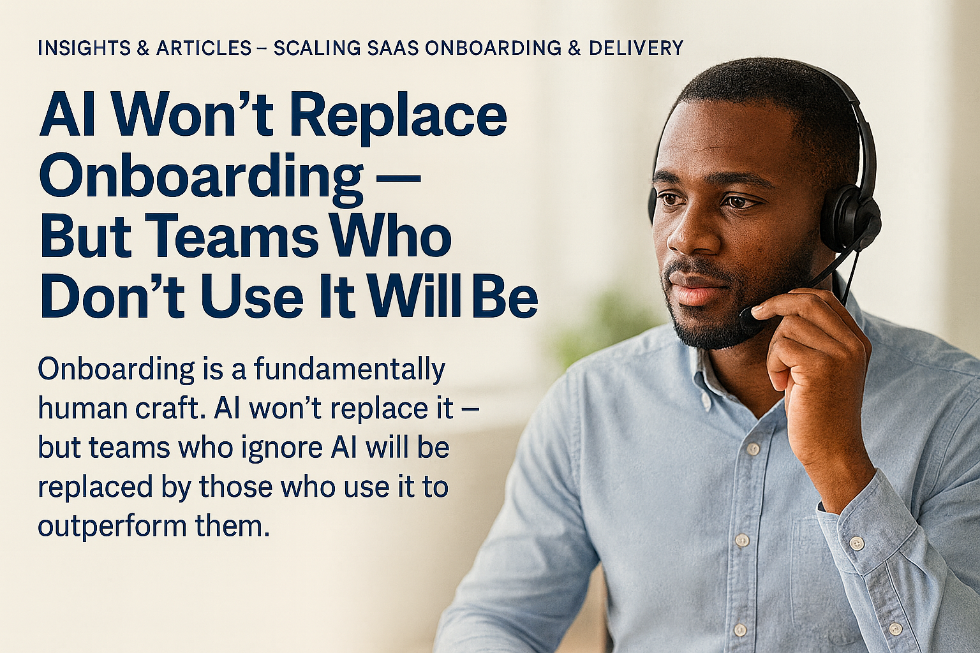
No. AI amplifies structured systems but cannot replace human judgment, client relationships, or professional authority. AI works best when embedded into governed onboarding infrastructure.
Plan → Do → Launch specializes in high-complexity and regulated SaaS environments, including compliance, reporting, financial technology, and enterprise software.
Two paths follow. One increases strain. The other builds durability.
Onboarding continues to function, but growth increases variance and executive intervention.
Revenue acquisition remains strong. Revenue protection remains inconsistent.
Onboarding performs consistently under growth because structure carries the load.
Growth feels lighter. Scale strengthens the system instead of straining it.
Measure your onboarding capacity to see where structure is holding — and where reinforcement is required.
Measure Your Onboarding Capacity